The Undeniable Impact of Ceiling Fan Direction on Your Summer Comfort
As the mercury rises and the days stretch long, many of us seek refuge indoors, relying on our cooling systems to keep the heat at bay. Amidst the hum of air conditioners, your ceiling fan stands as a quiet, often underestimated, ally in the battle against summer swelter. But have you ever stopped to consider which way should fan spin in summer to truly make a difference? The answer, surprisingly, holds significant sway over both your personal comfort and your monthly energy bills.
It might seem like a minor detail, but the direction your ceiling fan blades rotate isn't just an aesthetic choice – it's a fundamental aspect of how effectively your fan can cool a room. A fan spinning in the wrong direction for the season can leave you feeling warm and frustrated, while one correctly oriented can provide a palpable cooling effect, allowing you to potentially ease off your air conditioning thermostat. Understanding this simple mechanism can transform your home into a more comfortable, energy-efficient sanctuary year-round.
Which Way Should Fan Spin In Summer? The Counterclockwise Secret
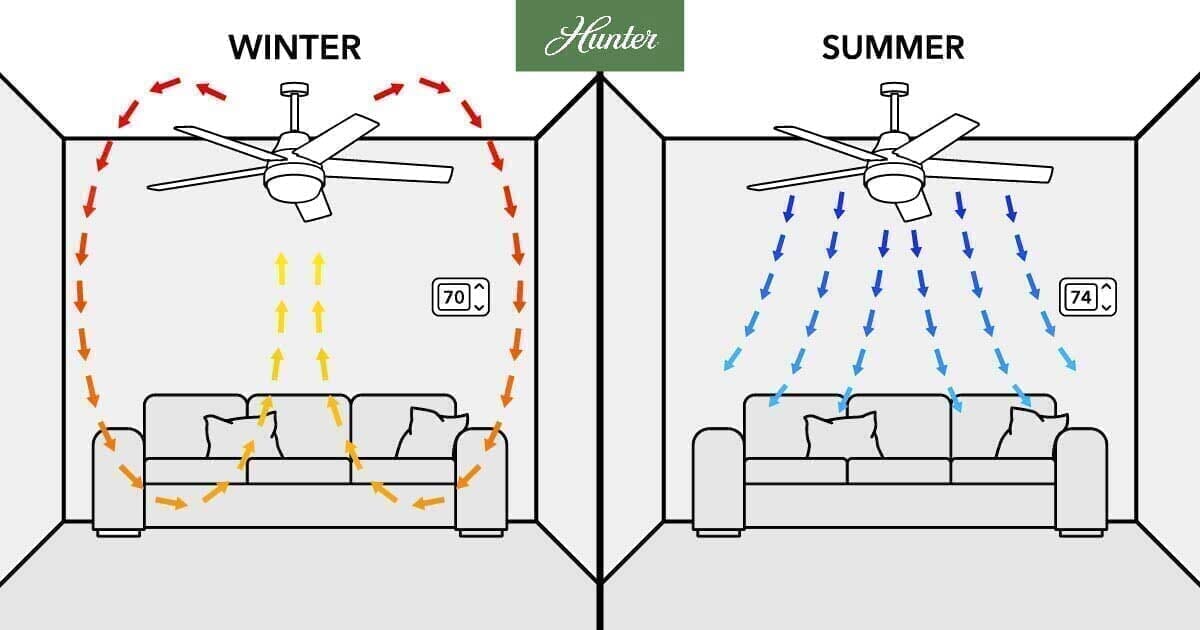
Let's cut right to the chase: for optimal cooling during the warmer months, your ceiling fan blades should always spin in a counterclockwise direction. This crucial alignment is what creates the direct, cooling downdraft that provides that welcome breeze, helping you feel significantly cooler without actually lowering the room's ambient temperature.
Imagine standing directly beneath your ceiling fan. If it's spinning counterclockwise, you should feel a distinct current of air being pushed straight down onto you. Visually, if you look up at the fan, the blades will appear to be moving from your right to your left – opposite to the way the hands of a traditional clock turn. This effect is achieved through the specific pitch and angle of the fan blades, which are designed to either push air down or pull it up depending on the rotation. When set to counterclockwise, these blades efficiently gather air from above and force it downwards, creating a powerful air circulation that makes all the difference on a hot day.
While the focus of this article is unequivocally on summer cooling, it's helpful to briefly contrast this with winter settings. In winter, you'd want your fan to spin clockwise, creating an updraft to gently redistribute warm air trapped near the ceiling. This shows that the direction truly matters, and it's a simple adjustment that can significantly impact your indoor climate. For a comprehensive guide on seasonal adjustments, you might find value in exploring Optimize Your Ceiling Fan: Direction for Year-Round Comfort & Savings.
Why Counterclockwise Delivers Summer Cool
The magic behind the counterclockwise spin for summer cooling lies in a phenomenon known as the "wind chill" effect. A ceiling fan doesn't actually lower the temperature of your room in the way an air conditioner does. Instead, it works by increasing air movement across your skin. As the fan pushes air downwards and creates a breeze, this moving air accelerates the evaporation of moisture (perspiration) from your skin. Evaporation is a cooling process, which makes you *feel* cooler and more comfortable, even if the thermometer in the room hasn't budged.
Think of it like stepping out of a shower and feeling a chill as the water evaporates from your skin. A ceiling fan harnesses this natural principle. When your fan spins counterclockwise, it ensures that this cooling downdraft is directed right where you need it most – onto the occupants of the room. The stronger the breeze, the more pronounced this evaporative cooling effect will be. This is why you can often feel a significant difference in comfort simply by adjusting your fan's direction, without having to crank up the air conditioning.
Beyond personal comfort, this evaporative cooling has a direct impact on your energy consumption. By feeling cooler, you can often raise your thermostat setting by several degrees Fahrenheit (often recommended as much as 4°F) without sacrificing comfort. This small adjustment can translate into substantial savings on your utility bills, as air conditioning is typically one of the most energy-intensive appliances in your home during summer.
Maximizing Your Summer Comfort and Savings
Once you've ensured your ceiling fan is spinning counterclockwise, there are a few additional tips to maximize its effectiveness and truly enjoy a cooler home while saving money:
- Run Fans Only When Occupied: Ceiling fans cool people, not rooms. There's no benefit to running a fan in an empty room, as it doesn't change the ambient temperature. Turn it off when you leave to save energy.
- Adjust Fan Speed: Most ceiling fans offer multiple speed settings. For maximum cooling, especially on particularly hot days, don't hesitate to use the highest speed. The faster the blades spin counterclockwise, the stronger the downdraft and the more noticeable the wind chill effect.
- Integrate with AC: Use your ceiling fan in conjunction with your air conditioner. The fan's cooling effect can make your home feel comfortable enough to raise your AC thermostat by up to 4 degrees Fahrenheit. This can reduce your cooling costs by as much as 12 percent, making a significant dent in your summer utility bills.
- Consider Room Size and Fan Size: Ensure your ceiling fan is appropriately sized for the room it's in. A fan too small for a large room won't provide adequate air circulation, even when spinning in the correct direction.
Embracing these practices not only enhances your comfort during the sweltering months but also contributes to a more sustainable and cost-effective household. For more specific guidance on optimal settings, delve into Summer Ceiling Fan Settings: Counterclockwise for a Cooling Downdraft.
How to Easily Change Your Ceiling Fan Direction
Changing your ceiling fan's direction from clockwise to counterclockwise (or vice-versa) is a surprisingly simple task that often takes mere moments. You don't need a professional; most modern fans are designed for easy seasonal adjustments.
1. Locate the Reverse Switch
The most common method involves a small "reverse switch" located on the fan's motor housing. This is typically a small toggle switch positioned just above the fan blades. Before you attempt to locate or flip this switch, always ensure the fan is completely turned off and stationary. For safety, it's wise to switch off the power at the wall switch or even the circuit breaker, especially if you need to use a ladder.
- For Remote-Controlled Fans: Many modern ceiling fans come with a remote control that includes a button specifically for reversing the fan direction. This is the easiest method, allowing you to change direction with a simple push of a button from anywhere in the room.
- For Smart Fans: If you have a smart ceiling fan, you might be able to change its direction using a voice command through a smart home assistant (like Alexa or Google Assistant) or via a dedicated app on your smartphone or tablet.
- Older or Basic Fans: For fans without remotes or smart features, the reverse switch on the motor housing is your go-to. Carefully climb a sturdy ladder if necessary, locate the switch, and firmly slide it to the opposite position. Once done, you can turn the fan back on and verify the direction and downdraft.
2. Verify the Direction
After changing the switch, turn the fan back on. Stand directly underneath it and feel for the breeze. If you feel a strong, direct current of air being pushed down, you've successfully set it to counterclockwise for summer. You can also visually confirm: the blades should appear to be moving from right to left.
Some very old ceiling fans may not have an easily accessible reverse switch. In these rare cases, the blade pitch might need to be manually adjusted, which is a more complex task and might require professional assistance or replacement if you're not comfortable with it.
Conclusion
Understanding which way should fan spin in summer is a simple yet powerful piece of knowledge that can significantly enhance your home's comfort and energy efficiency. By ensuring your ceiling fan blades rotate counterclockwise, you activate the cooling downdraft that provides a refreshing breeze, allowing you to feel cooler without the constant drain on your air conditioning unit. This small adjustment is easy to make and can lead to noticeable savings on your utility bills, making your home a more pleasant haven during those hot summer months. Don't let your ceiling fan be an underutilized resource; set it right and enjoy the cool relief it brings.